Leg Pain Treatment in Hillsdale When the Pain Shows Up at Night

13 October 2026

Leg pain that turns up at night usually has a pattern to it, and the pattern should be noted before anything else. A calf that cramps hard and then lets go within a few minutes isn't the same problem as toes that hurt most once you're lying in bed. Leg pain treatment starts with sorting out which one you've got.


At Advanced Vein & Vascular Management, leg cramps and leg blood clots are both on the list of what we treat, along with varicose veins and poor circulation in the legs and feet. Dr. A. Karim Abushmaies is board certified in vascular surgery and general surgery. He's also a Registered Physician in Vascular Interpretation, a credential that's specifically about reading vascular studies.


Is a Leg Cramp at Night a Circulation Problem?

Not necessarily. A leg cramp is a painful, involuntary spasm in the muscle that can last anywhere from a few seconds to a few minutes, and a calf that knots up in the middle of the night and then lets go is doing exactly that. Cramps like these can cut into your sleep and get in the way of exercise, too.


Where it gets less straightforward is that cramping pain in the muscles, whether it comes on with walking, with exercise or at rest, is also listed as a possible symptom of vascular disease. So is a leg or foot that looks pale or feels cool, and so are numbness and tingling. If your cramps keep coming back and any of those are showing up with them, that's worth bringing to a vascular doctor.


We treat leg cramps on their own as well, so a cramp that keeps breaking up your sleep is reason enough to come in, other signs or not.


What Does Leg Pain From Poor Circulation Feel Like at Night?

It's usually in the feet or toes, and it's often at its most noticeable once you're in bed. That's how critical limb ischemia tends to show itself, a serious form of peripheral artery disease in which too little blood gets through the arteries to the feet and the pain can be severe even while you're sitting or lying still.


The more common kind of artery pain shows up while walking instead. Narrowed arteries can't get enough oxygen to the leg muscles, so the muscles start to cramp, usually in the calves, and resting for a while can make it go away. Its nickname is shop window legs, from the habit of stopping every few hundred meters in front of a shop window until the pain eases off and then walking on to the next one. Pain in the feet at rest is less common than that, and it's the more serious of the two.


Rest pain from poor circulation often comes with other signs.

  • Reduced skin circulation and cold feet
  • Nail abnormalities
  • Less hair growth on the toes and lower legs
  • Skin wounds that are slow to heal
  • Sometimes, a foot that's a bit swollen


Left untreated, critical limb ischemia can lead to amputation of the affected limb, so foot pain at rest is worth having evaluated promptly.


When does a PAD specialist recommend a procedure?

Usually when the leg pain is bad enough to keep you from everyday activities, or when it hasn't responded to other treatment. That's the point where a procedure to restore blood flow, called revascularization, may be recommended. Angioplasty widens the narrowed section by inflating a tiny balloon inside the artery, and bypass uses a blood vessel taken from another part of your body to route blood around the blockage.


Before that point, PAD treatment means medication and lifestyle changes. For critical limb ischemia, advice on a healthy lifestyle is always part of the plan. Depending on severity, walking training is often effective, and medication comes in for high blood pressure, elevated cholesterol or diabetes where those are involved.


Atherosclerosis, the buildup of fatty deposits inside the arteries, is the most common cause of PAD, with blood clots in the arteries and injury to the limbs as less common ones. Our vascular specialist goes through the options with you before recommending anything, potential risks and benefits included.


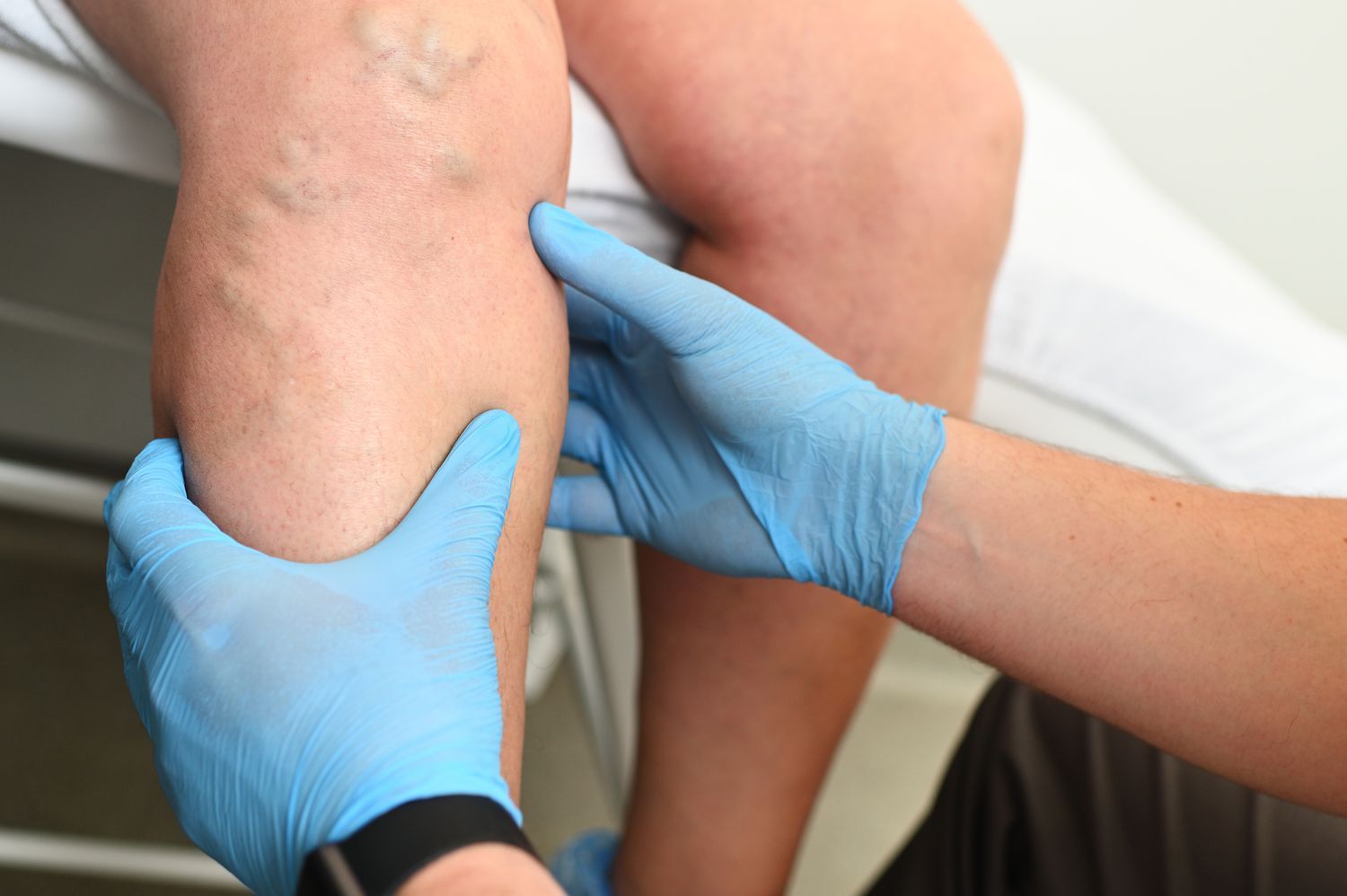
Why Do Varicose Veins Make Your Legs Ache?

The valves inside the leg veins are meant to close and keep blood heading back toward the heart. When they don't close properly, blood flows back and the veins dilate, and the legs or calves can get painful, especially after a long stretch of standing. So the ache tends to build over a day on your feet and show up by evening.


Jobs with long hours on your feet raise the risk, nursing and teaching being two obvious examples. Heredity and obesity both play a part, and for women, having had more than two children is on the list as well.


Treatment seals the faulty vein shut and leaves it in place, and your blood finds its way through healthy veins instead. Radiofrequency ablation and endovenous laser treatment both do the sealing with heat, through a catheter that's guided into the vein by ultrasound.


If those aren't suitable, ultrasound-guided foam sclerotherapy is the alternative, using a special foam injected into the vein to close it, and it can treat more than one vein in a session. Our vascular specialist will advise you on which one suits your legs.


More Questions About Leg Pain at Night

Can cold weather affect my feet?

It can, in the form of chilblains. They're discolored patches of swollen, itchy skin thought to come from cold weather combined with poor blood circulation, and they're among the open sore and cold feet problems we treat. Cold feet also turn up among the signs of poor circulation in the legs, so they're worth mentioning at an evaluation.


When is leg pain an emergency?

One clear case is leg pain that comes with sudden shortness of breath or chest pain, and that's a reason to call 911 or get to an emergency room straight away. A possible leg blood clot is worth getting checked promptly as well. It can cause a nagging, gnawing pain that's often described as a cramp or soreness, with redness or a blue discoloration and skin that feels warmer than the area around it, and the leg may feel heavy and swollen.


What tests are used to find the cause of leg pain?

That depends on what's suspected, and peripheral artery disease is looked at with imaging such as magnetic resonance angiography, computed tomographic angiography or an ultrasound scan, along with blood tests. For a possible leg blood clot, ultrasound is the standard test, since it shows the blood flow and can pick up clots in the veins.


Book Leg Pain Treatment in Hillsdale, MI

Our Hillsdale office is at 3271 W. Carleton Rd., Suite #2, and Advanced Vein & Vascular Management has a second office in Coldwater on W. Chicago St. We're open Monday through Friday from 8:00 am to 5:00 pm, and you can call (517) 797-5265 to arrange an evaluation.


Whether the pain that wakes you is coming from the muscle or from the blood vessels is the first thing worth knowing, because the rest of the treatment follows from that answer.


13 October 2026
A scan that turns up an abdominal aortic aneurysm doesn't automatically book you in for surgery. Plenty rides on one measurement, the diameter, and on whether it changes from one scan to the next. When the risk of rupture is small, we keep watching it rather than operate, with regular check-ups to see whether it's growing. At Advanced Vein & Vascular Management, that can mean check-ups and blood pressure medicine for as long as the numbers stay put, or it can mean a repair, done either through the artery from the groin or as open surgery. Dr. A. Karim Abushmaies is a board certified vascular surgeon. His fellowship training was at the University of Toronto, in vascular and general surgery, plus a cardiovascular surgery fellowship in London, Canada. Coldwater is part of our service area, and our office there is on W. Chicago St. What Makes It an Aneurysm? Width, mostly. Measured across, the aorta in your belly is normally about 2 centimeters. Once it has widened to one and a half times that, which works out to 3 centimeters or more, it gets called an aneurysm, and a few end up wider than 10. Aneurysms can form in any artery, but this length of the aorta, the main pipe supplying the abdomen, pelvis and legs, is where they're most common. Finding one usually takes imaging such as an MRI or a CT scan, and once it's on record that diameter becomes the number we track. At What Size Does an Aortic Aneurysm Need Surgery? For women the usual line is 5 centimeters, and for men it's 5.5, which is roughly where surgery may become necessary. Set against a normal aorta of about 2 centimeters, a woman's threshold works out to two and a half times the usual width, and a man's sits a little past that. There's a fair amount of room between the 3 centimeters that makes something an aneurysm and the size where repair comes up, and that gap is what watchful waiting is for. Size isn't weighed on its own, though, since a vascular surgeon follows the growth rate just as closely, and your overall health counts too, along with the aneurysm's location once there's a repair method to choose. What Happens During Watchful Waiting? Mainly regular check-ups, and for a small aneurysm those are usually ultrasounds. Each one adds a measurement, and the useful part is comparing them. A diameter that holds steady says the plan can stay as it is, while one that has crept up is the cue to look again, and catching that before the aneurysm reaches a critical size is the point of the whole routine. In between scans, the work is on lowering the odds of growth or rupture. On the medication side, the focus is blood pressure, and a medicine such as a beta-blocker may be prescribed to bring it down. Diet and exercise are the lifestyle side of it, plus quitting smoking if that applies to you, and close monitoring and management like this is how we approach an aneurysm that doesn't need surgery yet. How Advanced Vein & Vascular Management Repairs an Aortic Aneurysm Endovascular aneurysm repair (EVAR) This is the repair done from inside the artery. Working through an incision in the groin, the vascular surgeon guides a folded-in tube of metal and plastic, called a stent or endoprosthesis, through the blood vessel on X-ray until it's in the right place. Then it's opened out and secured. From that point the blood runs through the tube instead of through the bulge around it, so the weakened wall isn't taking the pressure anymore. Because it's less invasive than open surgery, endovascular repair is associated with shorter hospital stays and a quicker recovery. Fenestrated repair (FEVAR) near the kidney arteries Up near the kidneys, branch arteries leave the aorta, and a stent placed there has to leave them open. Where those branches sit varies from one body to the next, so the stent is custom made with openings that line up with yours. The openings are called fenestrations, which is where the name fenestrated EVAR, or FEVAR, comes from. Open surgical repair Open surgery is the other option, and both approaches have shown good long-term outcomes. Which one fits depends on the aneurysm's size and location and on your overall health, so it's a decision to talk through with a vascular specialist. Each comes with its own risks, which for open surgery include bleeding and infection along with possible reactions to the anesthesia. Endovascular repair can involve injury to the blood vessel or complications with the device. Those risks get weighed against what either repair is there to do, which is keep the aneurysm from rupturing. See a Vascular Surgeon Serving Coldwater Our Coldwater office is at 605 W. Chicago St., Suite #2, and Advanced Vein & Vascular Management's Hillsdale office is at 3271 W. Carleton Rd., Suite #2. Hours are Monday through Friday, 8:00 am to 5:00 pm.  If a scan has turned up an aneurysm, call (517) 797-5265 to book a consultation. Its diameter against your threshold, and how much it has grown since it was first measured, are the two figures behind the choice between monitoring and repair.
11 September 2026
Leg blood clot treatment is working on three things at once: stopping the clot from growing, preventing a pulmonary embolism, and preventing post-thrombotic syndrome, which is permanent damage to the vascular valves. Blood thinners handle the first. That third one is the least discussed of the three, and it's the reason compression belongs in treatment from the start rather than at the end. At Advanced Vein & Vascular Management, we manage deep vein thrombosis with correct positioning or mobilization and compression therapy, medicines that thin the blood such as heparin, thrombolysis to break down the thrombus, and surgery to remove the clot where that's what's called for. Which of those a leg needs depends on where the clot sits and how it's behaving. Why Deep Vein Thrombosis Treatment Starts With Stopping the Clot From Growing A clot that stays put and stays the same size is a manageable problem. One that extends up the leg is a different matter, because a longer clot reaches nearer the larger veins and has more of itself available to break loose. Anticoagulants are the opening move for exactly that reason. Blood thinners is a slightly misleading name for what these drugs do. They don't dissolve a clot that has already formed. What they do is stop new clot from being laid down while your own system breaks down the one that's there, which is why improvement is gradual and why the medication continues after the leg starts feeling better. Thrombolysis is the other tool, and it works on the clot directly. It's aimed at breaking down the thrombus rather than holding the line while the body gets there, and surgery to remove the clot sits further along again, for the situations that call for it. How Treatment Guards Against a Pulmonary Embolism Pulmonary embolism is the most serious complication of an untreated DVT, and it happens when a clot travels to the lungs and blocks blood flow there. Everything in the first stage of treatment is oriented around making that less likely, which is why anticoagulation is the standard opening move rather than a wait-and-see. If you develop sudden shortness of breath or chest pain, those are emergency symptoms, and they call for emergency care rather than a scheduled appointment. Everything else about a suspected clot in the leg is worth bringing in for a scan. What Post-Thrombotic Syndrome Is, and Why Compression Starts Early Deep veins carry blood back up the leg against gravity, and they depend on one-way valves to keep it heading in that direction. A clot sits directly in that machinery. Even once it clears, the valves it rested on can be left permanently damaged, and that is post-thrombotic syndrome. It shows up as pain, swelling and skin changes in the affected limb, and it's chronic rather than an episode you get past. Preventing it is a stated goal of deep vein thrombosis treatment alongside preventing a pulmonary embolism, which is what puts compression therapy on the treatment list rather than the aftercare list. Compression stockings and compression treatment support the vein from outside while the inside recovers, and correct positioning or mobilization is part of the same effort. None of it is comfort care. It's work on the valves, aimed at the part of recovery that outlasts the clot itself. How a Leg Blood Clot Doctor Confirms It Is a Clot Diagnosis of DVT draws on medical history, physical examination and imaging tests together. Ultrasound is the standard imaging test, since it can visualize blood flow and detect clots in the veins, and our vascular testing uses it alongside blood tests to settle the question. Symptoms on their own don't settle the question, which is the reason the scan matters. A leg blood clot tends to produce a nagging, gnawing pain that gets described as a cramp or soreness, along with redness or blue discoloration of the skin, skin that feels warmer to the touch than the area around it, and a heavy, swollen feeling of tension in the leg. Swelling can also come from venous insufficiency, where the valves in the leg veins don't operate correctly and blood pools, or from lymphedema, which is a buildup of lymph fluid in the tissues, and those are treated differently. Dr. A. Karim Abushmaies is a Registered Physician in Vascular Interpretation, board certified in vascular surgery and general surgery. The RPVI credential is specifically about interpreting vascular studies, which is where the answer comes from in a suspected clot. Questions People Ask About Blood Clots in the Leg What does a blood clot in the leg feel like? The pain is often nagging and gnawing, and people tend to describe it as a cramp or soreness rather than something sharp. The leg can feel heavy and swollen, with a sense of tension in it. Skin over the area may look red or take on a blue discoloration, and it can feel warmer to the touch than the skin around it. Who is most at risk for deep vein thrombosis? Prolonged immobility raises the risk, including long flights and bed rest, and so does surgery, particularly surgery involving the lower limbs or abdomen. Older age, obesity and smoking are on the list, along with medical conditions such as cancer, heart disease and clotting disorders. Pregnancy, birth control pills and hormone replacement therapy come into it as well. Can a leg blood clot go away on its own? Your body does work on clots, and part of what anticoagulation does is make room for that by stopping new clot from forming while the existing one breaks down. Leaving it alone is a different proposition, since an untreated DVT can lead to pulmonary embolism, and the valve damage behind post-thrombotic syndrome builds up while the clot is resolving. Treatment is aimed at both. How is a blood clot in the leg treated? Treatment strategy covers correct positioning or mobilization and compression therapy, medicines that thin the blood such as heparin, thrombolysis to break down the clot, and surgery to remove it. Compression treatment with stockings runs alongside the rest of it. Is one-sided leg swelling always a clot? No, and that's why the scan is worth doing rather than assuming either way. Venous insufficiency, where the leg vein valves don't operate correctly and blood pools, produces swelling too, and so does lymphedema, a buildup of lymph fluid in the tissues. Those get evaluated and treated differently, which is what a leg swelling doctor sorts out with imaging and examination. Where does the practice see patients? Our service area covers Hillsdale, Coldwater, Adrian, Jackson and Sturgis in Michigan, along with Toledo, Ohio. The Coldwater office is at 605 W. Chicago St., Suite #2, and the Hillsdale office is at 3271 W. Carleton Rd., Suite #2. Schedule Leg Blood Clot Treatment in Coldwater, MI A leg that's swollen and warm on one side, with a nagging ache and a feeling of tension in it, is a question an ultrasound can answer directly. The scan either finds a clot or points the search elsewhere, and both results change what happens next, since swelling has other causes that respond to treatment of their own.  Call (517) 797-5265 to arrange an evaluation with Advanced Vein & Vascular Management. Offices are open Monday through Friday, 8:00 am to 5:00 pm, and treatment that starts early is working on your lungs and on the valves you'll be standing on long after the clot is gone.
11 September 2026
Vascular claudication treatment rarely opens with a procedure. Advice on a healthy lifestyle comes with every plan, gait therapy is often effective depending on how severe the narrowing is, and medications for blood pressure, cholesterol or diabetes get added where they're needed. Angioplasty, stenting and bypass surgery sit further along the same path, for arteries that haven't responded to the rest of it. At Advanced Vein & Vascular Management in Hillsdale, that ordering isn't caution for its own sake. It follows from what's happening inside the artery, since a vessel that's narrowed and a vessel that's functionally closed don't call for the same tool. If you're the one with the cramping calf, the useful question is which end of that range your leg sits at, and that's a question imaging can answer. What Is Vascular Claudication, and Why Does the Pain Stop When You Do? Claudication is leg pain that arrives when you walk and settles when you stand still. Doctors also refer to narrowing of the leg arteries as intermittent claudication, and they use the broader term peripheral arterial disease, or PAD, for vascular problems in the peripheral parts of the body: arms, legs and feet. Resting muscle needs far less oxygen than working muscle, so a narrowed artery can still cover the smaller demand, which is why the pain lifts once you stop. It develops slowly, and that's part of why it goes unrecognized for a while. At first there isn't much to notice, because the legs still receive enough oxygen at rest. Complaints turn up gradually with walking, cycling or running, as the muscles go weak from lack of blood and oxygen, and what you feel is a stabbing pain and cramps in the legs. Cold feet and reduced sensation in the legs often turn up in the same picture, and so do toenails that grow more slowly than they used to. It's sometimes called shop window legs, after the habit of stopping every so often while the pain fades. What matters more than the intensity is the pattern. Claudication is reproducible, arriving at roughly the same distance and in the same muscle group each time, then easing once you're still. Pain that behaves that consistently is saying something about blood supply rather than about strain. How a PAD Specialist Chooses Between Walking Training and a Procedure The choice turns on severity, and above all on whether the leg is still getting enough blood at rest. That's the line between claudication and critical limb ischemia. Critical limb ischemia is a serious form of PAD, less common than claudication, and both usually come out of atherosclerosis, the hardening and narrowing of the arteries over time as fatty deposits called plaque build up inside them. Claudication means a leg short of blood under load and fine at rest. Critical limb ischemia means one short of blood even while you're sitting or lying still, with pain in the foot or toes that's often most noticeable in bed. Reduced skin circulation, cold feet, nail abnormalities, less hair growth on the toes and lower legs and poorly healing skin wounds fill out that picture, and sometimes the foot is a bit swollen too. That distinction sets the plan. Starting with walking training Advice for a healthy lifestyle is part of every plan we put together. Depending on the severity, gait therapy is often effective, and intensive walking training increases blood flow to the smallest vessels in the legs, which brings the pain complaints down. The narrowed artery itself doesn't widen. What changes is everything downstream of it, as the small vessels feeding the working muscle take on more of the load, and a leg trained that way handles more walking before the cramp arrives. It's slow work and it asks something of you, which is a fair trade for an approach that carries no recovery period at all. Medications go in when they're needed, for high blood pressure, elevated cholesterol or diabetes, and anti-clotting drugs are prescribed to prevent blood vessel occlusion. None of that is a placeholder while you wait for something better. It's treatment, and for a good number of legs it's enough on its own. When a procedure moves up the list Severity moves it up. So does a leg that isn't responding to the conservative plan, and so does the arrival of rest pain or a wound that won't close, since those point toward critical limb ischemia rather than claudication. Left untreated, the complications of critical limb ischemia can result in amputation of the affected limb, and that's why the threshold for intervening drops once a leg reaches that stage. We handle treatment across the non surgical, minimally invasive and surgical range, and our doctors offer balloon angioplasty and stent treatment as well as bypass surgery, so the plan can move as the artery dictates. What Angioplasty, Stenting and Bypass Surgery Involve Each of these does something physically different inside the artery, and those differences are what decide which one suits a given blockage. Balloon angioplasty Contrast dye goes in. The vascular surgeon injects a special contrast medium through a catheter into your bloodstream, and the dye is what allows the arteries to be seen on an X-ray monitor. The balloon travels to the narrowing. An instrument with a small balloon on the end of it is inserted through an artery in your leg or arm and advanced through the arteries until the narrowed area is reached. Inflation opens the vessel. The balloon pushes the plaque against the artery wall, dilating the opening in the artery so blood can flow again. The balloon comes back out. It's deflated and removed from the body. All of it happens from inside the vessel. Minimally invasive techniques bring shorter recovery times and less trauma, with less pain and reduced use of anesthetics. Stenting Angioplasty on its own isn't always sufficient, and sometimes blood still can't flow properly afterward. A stent can be placed then. It gives the vessel wall extra support and prevents the blood vessel from springing back after angioplasty, which is the particular failure a stent exists to solve. Bypass surgery Sometimes angioplasty or a stent isn't enough either, because the narrowing is very extensive or sits somewhere a dotter can't be performed. Bypass surgery becomes an option at that point, and the vascular surgeon creates a bridging for the occluded or severely narrowed artery. Both connections are planned rather than improvised. The upper one is made at the level of the groin, to the femoral artery. For the bottom connection, a duplex examination or angiography is used in advance to locate a site in the blood vessel below the closure, which can be above or below the knee depending on where the artery is still open. What Dr. Abushmaies Looks At Before Recommending Anything Imaging does most of the work. An ultrasound scan, magnetic resonance angiography and computed tomographic angiography are how the arteries get mapped, with blood tests filling in around them. Knowing where the narrowing is and how long a segment it covers matters, and so does what the vessel looks like below it, because a healthy landing zone is part of what separates a leg suited to a balloon from a leg suited to a bypass. Dr. A. Karim Abushmaies is board certified in vascular surgery and general surgery, and a Registered Physician in Vascular Interpretation, the credential that covers interpreting vascular studies. He completed fellowships in vascular surgery and general surgery at the University of Toronto, along with a cardiovascular surgery fellowship in London, Canada. Advanced Vein & Vascular Management treats vascular disease in an environment with advanced imaging and interventional equipment, which is what makes the non surgical and minimally invasive end of that range workable. Common Questions About Vascular Claudication Treatment Can claudication be treated without surgery? Often, yes. Advice for a healthy lifestyle is part of every plan, gait therapy is frequently effective depending on severity, and medications are added for high blood pressure, elevated cholesterol or diabetes where those are in play. Angioplasty and stenting are minimally invasive rather than open surgery, so even a procedure doesn't necessarily mean an operation. How is claudication different from ordinary leg cramps? Exercise is the trigger and rest is the relief, in a pattern that repeats itself, and an ordinary cramp doesn't hold to that pattern. Cramping pain in the muscles with walking, exercising or also at rest, paleness or coolness of the leg or foot, and numbness or tingling are all possible symptoms of a vascular disease. A cramp that arrives at rest is worth raising rather than ruling out. Does walking help claudication or make it worse? Walking is part of the treatment. Intensive walking training increases blood flow to the smallest vessels in the legs and reduces the pain complaints, and gait therapy is often effective depending on how severe the narrowing is. Any walking program is worth setting up with your vascular doctor, since the right amount depends on what the imaging shows. What if the leg pain is there while I'm sitting still? Pain in the foot or toes at rest, often most noticeable while lying in bed, is a different presentation from claudication and points toward critical limb ischemia. It tends to come with reduced skin circulation, cold feet, nail abnormalities and poorly healing skin wounds. That combination is worth a prompt evaluation. Which areas does the practice cover? Our service area covers Hillsdale, Coldwater, Adrian, Jackson and Sturgis in Michigan, along with Toledo, Ohio. The Hillsdale office is at 3271 W. Carleton Rd., Suite #2, and there's a second office in Coldwater on W. Chicago St. Schedule Vascular Claudication Treatment in Hillsdale, MI If your calf tightens at a predictable distance and lets go once you stop, that's a symptom with a cause worth identifying, and identifying it is a matter of imaging rather than guesswork. Leg pain treatment at Advanced Vein & Vascular Management starts there, and our vascular claudication treatment in Hillsdale runs the whole range, from the walking program through to angioplasty, stenting and bypass surgery. Call (517) 797-5265 to book an evaluation. Hours are Monday through Friday, 8:00 am to 5:00 pm, and the imaging is what turns a vague ache into a map of which arteries are narrowed and how much room there is to work with.
13 August 2026
Legs swell for a long list of reasons, and from the outside a good number of them look identical. Veins, lymphatics, the heart, the kidneys, a medication started three weeks ago, all of it can show up as the same puffy ankle by evening. So the first real task at an appointment is narrowing that list down to whichever system is actually generating the fluid. Advanced Veins & Vascular works that out with diagnostic ultrasound. The reason it matters this early is that the treatments diverge quickly. Compression is the right answer for a venous problem, an arterial one calls for a different approach entirely, and identifying which you have is what lets the treatment do lasting work. Dr. A. Karim Abushmaies is board certified in vascular surgery and holds a Certificate of Added Qualification in Vascular Surgery from the Royal College of Physicians and Surgeons of Canada, along with RPVI certification in vascular interpretation. What follows is roughly how a leg swelling doctor works the question through, and why each piece of it changes the recommendation at the end. When Should You See a Doctor About Leg Swelling? Sudden swelling in one leg, arriving with pain, warmth, or a change in color, is worth a same-day appointment. Blood clots can present that way, and they respond well to treatment when they are picked up early, which is the whole reason the timing is worth acting on. Slower swelling gives you more room to work with, and legs that fill through the day and go back down overnight usually indicate something on the venous or lymphatic side, so waiting a few weeks for an appointment is reasonable. The sign worth moving on sooner is skin change, since darkening or stiffening around the ankle indicates the venous side has been working under pressure for a while, and that tends to be the point where treatment makes the most visible difference. Swelling that turned up after a new prescription deserves a separate mention. Some blood pressure medications, calcium channel blockers in particular, cause ankle edema on their own, and a quick conversation with the prescriber can often settle it. Why Swelling in Only One Leg Narrows Things Down Fast Asymmetry does most of the diagnostic work early on. One swollen leg points local, which narrows things to a clot, a vein that has stopped working properly, damage to the lymphatic channels from an old injury, or scarring higher up in the pelvis or groin from previous surgery. Two swollen legs widen the search considerably, and now the heart is on the list, and the kidneys, and the liver, and any number of prescriptions, alongside venous insufficiency that happens to be affecting both sides at once. This is where seeing a vascular doctor pays off in either direction. A leg swelling specialist who scans the veins and finds them clear has narrowed the field considerably, and your primary care doctor then knows exactly where to look next. A clear scan is a useful result in its own right. Diagnostic Ultrasound at Advanced Veins & Vascular Duplex ultrasound settles most of this, and Advanced Veins & Vascular offers rapid diagnostic ultrasound for exactly that reason. The scan looks at two things at once, whether blood is flowing backward through valves that should be holding it, and whether a clot is sitting anywhere in the deep or superficial system. A vascular workup for swelling generally moves through four stages, and the scan is only the third of them. Symptom history . When it started, whether it rises through the day, what has already been tried, and whether it has ever fully gone away. Physical exam . Skin texture and color, plus whether the swelling pits under thumb pressure. Foot pulses get checked here too, which confirms the arterial supply is healthy before compression enters the plan. Duplex ultrasound . The scan described above. Diagnosis, then options . Treatment at the practice runs from medication management through to catheter-based procedures, and where you land on that range depends on what the first three stages turned up. The sequence matters more than it looks, since a history of swelling that peaks by evening and resolves after a night lying flat has already suggested venous insufficiency before anyone picks up a probe, and the ultrasound is then confirming a suspicion it did not generate on its own. Leg Swelling Often Has More Than One Cause at Once Venous insufficiency and lymphedema get filed as two conditions. In a lot of legs they are the same process at two different points. The link between them runs through pressure, because veins that cannot clear blood out of the leg efficiently push it back into the smaller vessels, and venous hypertension is the term for that. Sustained long enough, that pressure interferes with the lymphatic system's ability to pull fluid out of the tissue, which is how a venous problem gradually takes on a lymphatic component as well. Lymph node removal during cancer treatment is the cause most clinicians think of first, and it is a real one. Congenital failures of lymphatic development account for a share as well, and trauma or infection can disrupt the system too. In the United States, though, venous insufficiency appears to be among the most common drivers of the whole thing. Which is the practical part. Scanning the veins alongside the lymphatic assessment tends to make a compression plan more durable, because it shows whether there is a venous component available to treat as well. Fair thing to raise at a vein clinic before settling into a long-term plan. Can Leg Swelling Be Treated Without Surgery? Usually, yes. Manual lymphatic drainage, a gentle massage technique that stimulates the lymphatic system, tends to be among the first things tried for lymphedema, and compression therapy and graded exercise handle a good portion of what remains, with lifestyle adjustments doing the rest. Where the cause turns out to be venous, the corrective procedures are still not open surgery. Radiofrequency ablation, endovenous laser treatment, and ultrasound-guided foam sclerotherapy all work through a catheter or a fine needle, which is where the reduced trauma and the lighter anesthetic requirement come from. Results build steadily where lymphedema has been present for years, and the target is a leg that is smaller, more comfortable, and healthier at the skin, with comfort often improving ahead of the measurements. Knowing what the plan is working toward makes the early weeks of it much easier to stick with. Seeing a Leg Swelling Doctor in Michigan Advanced Veins & Vascular runs offices at 3271 W. Carelton Rd. Suite #2 in Hillsdale and 605 W. Chicago St. Suite #2 in Coldwater, Monday through Friday, 8 to 5, and the practice also serves Adrian, Jackson, and Sturgis. Booking runs through (517) 797-5265, or you can get in touch through our site.  What that first appointment should produce is an actual answer, which system is driving the swelling, whether a clot has been ruled out, and what the options look like for the specific cause you turn out to have. If the veins come back clean, you leave knowing that too, and knowing where the question goes next.
13 August 2026
A carotid ultrasound report comes back with a percentage on it, and that percentage is where most conversations start. On its own it settles very little. Whether a narrowed carotid gets treated turns on what the artery has already done, where the narrowing sits, and what has been tried before it. Advanced Veins & Vascular treats carotid artery disease with carotid angioplasty and stenting, and the criteria for that procedure show how the decision actually breaks down. A blockage of 70 percent or more is one route in, particularly where stroke symptoms have already happened. A previous carotid endarterectomy that has narrowed again is another, and so is a narrowing sitting somewhere an open operation cannot easily reach. Dr. A. Karim Abushmaies is a board-certified vascular surgeon who works primarily through endovascular technique, which is the catheter-based approach that carotid stenting relies on. What follows is how each of those criteria works in practice, including the part where the honest answer is still a matter of judgment. What Percentage of Carotid Blockage Needs Treatment? Seventy percent is the figure that appears in the candidacy criteria for carotid angioplasty and stenting, and it is the number worth walking into a consultation already knowing. At or above that line, intervention is genuinely on the table. Below that line the conversation changes shape, since moderate narrowing in the 50 to 69 percent range generally gets managed medically first, with blood pressure control, statin therapy, antiplatelet medication, and smoking cessation doing the work. Medical management is a genuine treatment in its own right, since it has improved substantially over the past two decades, and for a good number of moderate narrowings it carries the better evidence. Stenosis percentages also move over time, since carotid narrowing progresses in some people and holds steady in others, and ultrasound imaging is what shows the buildup and measures its effect on blood flow at each look. Why the Same Reading Means Different Things in Different People Symptoms are what move a borderline reading off the fence. The candidacy criteria single out patients at 70 percent or more who have had stroke symptoms, and the two conditions appear together for a reason. An artery that has already produced symptoms has told you something a scan cannot show on its own, and that information makes the treatment decision considerably clearer. Short vision loss, weakness, and speech problems are the warning signs that carry the most weight here, because any one of them reclassifies the artery entirely. The same 70 percent reading in someone who has never had an episode sits in a different risk category. Two of the published criteria have nothing to do with the percentage at all. A previous endarterectomy that has narrowed again . Working through scar tissue in the neck adds complexity, so stenting often becomes the more straightforward route the second time around. Narrowing in an awkward spot . Some blockages sit high in the neck or low toward the chest, out of easy reach for an open procedure, and a catheter gets there without the same constraint. Beyond the criteria themselves, the wider cardiovascular picture shapes the timing. Kidney function, heart disease, and how well the blood pressure and cholesterol are already controlled all feed into whether an intervention is the right fit at this point. The Cases That Call for a Longer Conversation Asymptomatic moderate stenosis is where the discussion gets more detailed. Someone carrying a 60 percent narrowing with no symptoms sits in a category where clinical judgment carries real weight, and where the evidence has continued to develop as medical therapy has improved. A vascular surgeon weighs both sides of that against your own cardiovascular picture. Practically, that means a consultation about asymptomatic narrowing should have numbers in it. Annual stroke risk without intervention, procedural risk with it, and how the two compare across the years you expect to be around. Those three figures are what a good recommendation rests on, and they are worth asking for directly. Symptoms simplify the picture considerably. Where a TIA or a stroke has occurred alongside significant carotid narrowing, the path forward is well established and the benefit of moving promptly is clear, with the accepted window for treatment generally measured in weeks. Carotid Disease Treatment at Advanced Veins & Vascular Carotid angioplasty and stenting is done through the femoral artery in the groin. A catheter goes in there and gets threaded up through the arterial system until it reaches the narrowing in the neck, which means the neck itself is never opened. Before anything gets inflated, an umbrella-shaped filter is placed beyond the narrowing. That filter is the detail worth understanding, because it sits downstream as a safeguard, positioned to capture any plaque that loosens while the artery is being opened. A small balloon at the catheter tip then inflates and pushes the plaque outward against the vessel wall, and a stent, which is a small metal coil, stays behind as a scaffold to keep the artery from closing down again. Advanced Veins & Vascular performs this procedure as part of its carotid disease treatment, and the endovascular approach is where the reduced trauma and the lighter anesthetic requirement come from. What Recovery Looks Like After Carotid Stenting Discharge generally happens within 24 hours of the procedure, following a period of observation. Most people are fit to return to work in three or four days, with supervision and monitoring in place through that stretch. Most of what shapes the first day or two is the groin entry point. Lying still for several hours in the recovery area keeps the catheter site from bleeding, heavy and strenuous activity is set aside for 24 hours, and acetaminophen is generally enough for the discomfort. The site itself can stay tender and a little swollen for a few days, sometimes with slight discoloration or a small lump about the size of the puncture, all of which settles on its own. Stenting addresses the narrowing directly, and the medical program continues alongside it. Managing blood pressure and cholesterol stays in place to look after the rest of the arterial system, and that medication side of carotid artery disease treatment does real work of its own. Seeing a Carotid Specialist in Coldwater The Coldwater office sits at 605 W. Chicago St. Suite #2, open Monday through Friday from 8 to 5, and Advanced Veins & Vascular also sees patients in Hillsdale and across Adrian, Jackson, and Sturgis. Booking runs through (517) 797-5265, or you can get in touch through our site.  What a first carotid consultation should give you is your actual percentage, whether it counts as symptomatic, which treatment route you fall into if any, and a date for the next scan if the answer is to keep watching. Even an answer of keep watching is worth having in that form, with a date attached and a reason behind it.
13 July 2026
Carotid Artery Disease and Stroke Prevention: What a Carotid Specialist Looks For The carotid arteries rarely get a second thought, and there's little reason to give them one until they start to narrow. They run up either side of the neck, and the branch a carotid specialist watches most closely is the one carrying blood into the brain. Carotid artery disease is the name for that vessel narrowing, and the reason it draws attention is plain enough. A tighter artery leaves less room for the blood the brain runs on. It usually builds slowly and quietly, without pain or much of a signal, which goes a long way toward explaining why it so often gets missed. That's what makes screening worth the trouble, since a duplex ultrasound can turn up the narrowing well before it has caused any harm. At Advanced Veins and Vascular, the sooner it turns up, the more say we have over what comes next, and since this is really a stroke-prevention conversation at heart, finding it early is the whole game. How Plaque Narrows the Carotid Arteries The narrowing itself comes from atherosclerosis, the same slow furring-up of the arteries that people usually connect with the heart. Cholesterol and fatty material settle along the inner wall over the years and harden into plaque, and bit by bit the channel blood travels through gets tighter. What's easy to forget is that the process rarely keeps to one location. When plaque turns up in a carotid, there's a fair chance it's quietly at work in other arteries too. A narrowing on its own is only half the concern, though. The part we watch for is what happens if that plaque cracks, since a clot can form right at the damaged spot and a fragment can break loose and travel into the brain. A carotid that closes off completely, which we call an occlusion, pushes the risk up sharply. That's really why carotid disease and stroke get spoken about together, because the danger isn't the narrowing so much as what a roughened, narrowed artery can send downstream. None of that means a narrowed carotid is a stroke waiting to happen tomorrow. Plenty of people carry some degree of it for years with nothing ever coming of it. What it does mean is that the finding is worth measuring properly and keeping an eye on, rather than filing away and forgetting. Why Carotid Disease Often Has No Symptoms The thing that catches people off guard is how quiet it stays. Carotid disease usually doesn't hurt, and it rarely produces a symptom you'd notice on your own until the narrowing is well along or a clot has already moved. That silence is why the risk factors end up carrying most of the weight in deciding who ought to get checked. What raises the odds is mostly the familiar cardiovascular list. Age plays into it, and smoking pushes things along on its own. The metabolic factors tend to cluster, so high blood pressure and high cholesterol often ride together with diabetes or insulin resistance, and extra weight feeds the whole picture. Family history matters as well, particularly atherosclerosis that showed up as heart trouble or carotid disease in a close relative. When several of these stack up in one person, that's usually reason enough to look at the arteries before anything forces the issue. One situation changes the timeline completely. A transient ischemic attack, sometimes called a mini-stroke, is a brief episode where blood flow to part of the brain dips just long enough to cause symptoms that then clear on their own. It might be sudden weakness down one side, or words that won't come out right. Sometimes it's a patch of vision going dark for a moment. Because these pass quickly, they're easy to brush off. They shouldn't be. A TIA is often the plainest warning a carotid problem gives before a full stroke, and it turns a routine check into an urgent one. How Advanced Veins and Vascular Checks for Narrowing Checking for it is refreshingly undramatic. The usual tool is a duplex ultrasound of the neck, and there's not much to it from where you're sitting. You lie back, someone runs a little gel and an ultrasound probe over the side of your neck, and a picture of the carotid builds on the screen along with a read on how fast blood is moving through it. It's a pain-free outpatient test, and most of the time you're finished inside the hour. What that scan gives us is both a look at the artery wall, plaque and all, and a sense of whether the narrowing is genuinely restricting flow or just sitting there. Those two readings are what turn a vague worry into something measurable. Dr. Abushmaies is a Registered Physician in Vascular Interpretation, which is the credential that covers reading these studies. From there, the picture usually clarifies fairly quickly. Mild narrowing generally means keeping an eye on it and managing the risk factors over time. More significant narrowing is a different conversation and can change what we would recommend. Knowing which of those you are actually dealing with is the entire point of the scan. Carotid Disease Treatment, From Lifestyle Changes to Procedures Treatment follows the finding, which is the whole reason we measure first. For a fair number of patients, especially those on the milder end, the work is about lowering risk rather than operating. Most of it is unglamorous, the ordinary business of getting blood pressure and cholesterol into better territory, keeping blood sugar steady, and stepping away from tobacco where that applies. Diet and weight feed into it in the ways you'd expect. Prescribed medication often rides alongside to help manage those same numbers, and while none of that is dramatic, for the right patient it's the most sensible course there is. When the narrowing gets serious enough that risk reduction alone won't hold it, the conversation turns to procedures. There are three broad ways to go at it. Which one suits a patient depends partly on where the narrowing sits and how severe it is, and partly on what the plaque is made of and the other conditions someone is carrying. One is carotid endarterectomy, the open operation, where the surgeon opens the artery, clears the plaque out directly, and closes the vessel with a patch of vein or synthetic material so blood runs cleanly again. Stenting takes the endovascular route instead, reaching the narrowing through a small puncture in the groin under local anesthesia, with the patient awake the whole time. A stent gets threaded up into the carotid and expanded to hold things open, and a protection system usually rides along to catch any loosened debris before it can reach the brain. The third option, a hybrid of the two, comes into play when the narrowing sits right at the origin of the artery, down behind the breastbone, where neither surgery nor a stent alone is a clean fit. An honest answer to which one you'd need is that it depends, and it's really not a call to make off a blog post. What's fair to say is that all three are after the same result, keeping blood moving to the brain and keeping a clot from ever making that trip. Talk With a Carotid Specialist Serving Hillsdale and Coldwater If a handful of those risk factors describe you, or you've had an episode that sounds like the mini-stroke above, getting the carotid arteries checked is a simple next step and not one to put off. The screening ultrasound is quick, and it earns its place no matter what it shows, since a clear scan reassures on its own and a scan that turns something up hands us a head start. Advanced Veins and Vascular has offices in Hillsdale and Coldwater, and we see patients from Adrian, Jackson, Sturgis, and Toledo as well. Dr. Abushmaies is a board certified vascular surgeon, fellowship trained in vascular and general surgery at the University of Toronto. We're open Monday through Friday, 8 to 5.  Call (517) 797-5265 or visit our site to set up a consultation with a carotid specialist. However the scan comes back, you'll walk out knowing where your carotid arteries actually stand instead of guessing, and if something does need attention, you'll have caught it while the widest range of options is still open.
13 July 2026
Leg Blood Clot Treatment: What Happens After a DVT Is Confirmed  Once a deep vein thrombosis is confirmed, the questions change in a hurry. The worry stops being about whether something's wrong and starts being about what happens next, which is usually where the real unease lives, since most people know a blood clot is serious without having any picture of what treating one actually looks like. The reassuring part is that it tends to be more orderly than it sounds. A leg blood clot, or DVT, forms in one of the deep veins running through the leg or pelvis, the ones that carry blood back up toward the heart. Block one of those veins and blood starts to pool behind the clot, and that pooling is what shows up as swelling and a deep ache. What makes it worth treating quickly isn't the discomfort, though. It's the chance that a fragment breaks off and travels, and heading that off is really what treatment is for. At Advanced Veins and Vascular, leg blood clot treatment works on a few fronts at the same time, and seeing what those are makes the rest of the plan easier to follow. So instead of walking through symptoms again, it's more useful here to lay out what treatment does and what the recovery afterward tends to involve. What Treatment Is Trying to Accomplish A couple of things need to happen right away. Keeping the clot from growing comes first in practice, because a larger clot causes more trouble where it sits and is likelier to shed a fragment. Close alongside that is the work of clearing the clot so blood can move through the leg normally again. Those two tend to run together in the early days. The reason a leg clot is urgent, rather than just uncomfortable, sits a little further out. If a piece breaks away, it can ride up through the veins and lodge in an artery in the lungs, and that is a pulmonary embolism, a real emergency. Most clots never go that way. The catch is that there's no reliable way to know in advance which ones might, and that uncertainty is exactly why treatment starts promptly instead of waiting to see how it plays out. There's a longer-range concern too, and it's the one people tend to overlook because it shows up well after the first week. A clot can scar the small valves inside a vein, and when those valves don't fully recover, you get post-thrombotic syndrome, a nagging combination of swelling and skin changes, with an ache that can drag on for years. A good share of what treatment does early is meant to head that off, not only to clear the blockage in front of us. How the Clot Actually Gets Treated The specifics shift from person to person, mostly according to the size and location of the clot and how long it's been sitting there. A patient's overall health steers things as well. In most cases the treatment pulls from a familiar toolkit, and the backbone for a lot of DVT is medication that lowers the blood's tendency to form new clots. People call these blood thinners, even though nothing actually gets thinner. What they really do is hold the line, stopping the existing clot from growing and keeping fresh ones from forming while the body works the original down over the weeks and months that follow. Heparin is a common starting point. Alongside the medication, a few plain measures earn more than they get credit for. Simple things like elevating the leg or getting it gently moving keep blood from pooling, and properly fitted compression takes down the swelling a clot brings on. None of that is the dramatic part of treatment, but it has a real say in how the leg feels day to day and how well it bounces back. When a clot is larger or more stubborn, or it's clearly causing problems, medication on its own may not be enough, and the procedural options come into view. Thrombolysis delivers clot-dissolving drugs right up close to the clot, sometimes together with a catheter that can break it apart or draw it out. Our practice tends to handle this with minimally invasive techniques, pairing small devices with clot-busting medication through a puncture instead of an open incision, which usually means less discomfort and a faster recovery. For the larger or more damaging clots, surgery to remove it outright can be the more sensible route. Deep Vein Thrombosis Treatment and the Weeks After Deep vein thrombosis treatment doesn't wrap up the moment the initial clot is dealt with, and being straight about recovery matters just as much as the first intervention does. Anticoagulation tends to run for months rather than weeks, and how long really hinges on what set the clot off in the first place. If it followed a one-time trigger, say surgery or a long spell of not moving, treatment often runs a defined stretch. A clot tied to an ongoing risk factor can call for a longer course. Where your case lands is a conversation to have with the physician managing it, because there's no single duration that fits everyone. Compression usually stays in the picture through much of that window. Compression stockings apply steady pressure to the leg, which keeps blood moving and brings the swelling down, and heading off the post-thrombotic syndrome mentioned a moment ago is one of the things treatment aims at from the start. Wearing them as directed is one of the more genuinely useful things you can do for the long-term result, even if they rank among the least exciting parts of it. Follow-up rounds it out. A clot keeps changing over time, and the risk of a second one doesn't disappear the day the first gets treated, so checking how the healing is going and taking another look at risk factors belongs in the plan rather than sitting outside it. The whole point is a leg that gets back to working normally, without the lasting aftereffects a clot can otherwise leave behind. How Advanced Veins and Vascular Approaches DVT Care There's a down-to-earth reason to let a vascular practice manage a clot instead of treating it off in a corner. A DVT is a problem of the venous system through and through, so the same practice that finds it on ultrasound is already set up to step up to a procedure if the clot turns out to need more than medication. Our vascular testing and our interventional options sit inside the same program, which is what keeps the diagnosis and the treatment connected. Our team covers that whole span, from the straightforward cases that need medication and monitoring to the knottier ones that call for minimally invasive intervention. It's a specialized team, with board certified vascular medicine specialists managing deep vein thrombosis through non-invasive therapy, and vascular surgeons and interventional radiologists on hand when a blockage calls for a minimally invasive procedure. Dr. Abushmaies is a board certified vascular surgeon, fellowship trained at the University of Toronto and a Registered Physician in Vascular Interpretation. Leg Blood Clot Treatment for Hillsdale and Coldwater Timing matters with clots, so one quick note before the practical details. Swelling or a deep ache that settles into one leg and won't ease up is worth getting looked at the same day rather than waited out, especially if the leg also feels warm to the touch. And if any of it comes with sudden shortness of breath or chest discomfort, that's an emergency room, not a phone call. For a leg that's been nagging you and you can't quite call it, a prompt evaluation is simply the right move. Advanced Veins and Vascular provides leg blood clot treatment from our Hillsdale and Coldwater offices, and we see patients from Adrian, Jackson, Sturgis, and Toledo as well. We're open Monday through Friday, 8 to 5, and reaching a leg blood clot doctor is as simple as a call to (517) 797-5265 or a consultation request through our site. Some clots need little more than medication and time, while others call for something more hands-on, and in any of those situations you'll leave with a plan shaped around your own case and a clear read on what the coming weeks hold, rather than managing a swollen, aching leg on guesswork.
10 June 2026
Leg Swelling That Won't Go Down: When to See a Leg Swelling Doctor Most people don't notice their legs in February. Pants, boots, weather that keeps everyone inside. Then June shows up, the shorts come out, and there's an ankle at seven in the evening that doesn't look much like the ankle from seven in the morning. Heat makes fluid retention worse, which is part of why early summer is when a lot of these problems get noticed for the first time, even though whatever's driving them has usually been building for a while. Swelling after a long day on your feet isn't automatically a problem. It happens, then it drains overnight, and you move on. The kind worth taking seriously shows up daily, hangs around past morning, or keeps inching higher up the leg, and that pattern points at the veins or the lymphatic system far more often than it points at anything you did that day. A leg swelling doctor can usually sort out which it is faster than people expect. What a Leg Swelling Doctor Pays Attention to First Before any testing, the pattern does a lot of the work on its own. Both legs swelling slowly over weeks usually means veins, lymphatics, or a fluid balance issue somewhere. One leg blowing up over a day or two is a different animal entirely, because that can be a blood clot, and clots don't get the watch-and-wait treatment. A few situations shouldn't sit until a routine appointment: One leg that turned swollen, warm, or discolored within hours or days, particularly after surgery or a long stretch of sitting still. Sudden shortness of breath or chest discomfort on top of the leg symptoms. That's an emergency room trip, not a phone call. An open sore on the swollen leg that won't close. Chronic swelling sits at the other end of the urgency scale, but it isn't something to leave unexamined for months either. Fluid parked in the tissues changes the skin slowly, and the later those changes get caught, the harder they generally are to walk back. Venous Insufficiency: What a Leg Swelling Specialist Sees Most Often The veins are behind more chronic leg swelling than anything else. There are small valves inside the leg veins whose entire job is keeping blood moving up toward the heart, and once those start failing, blood pools down in the lower leg instead of moving along. That's venous insufficiency. The pooled blood raises pressure inside the vein, and that pressure squeezes fluid out into the surrounding tissue. The daily rhythm is distinctive enough that it nearly diagnoses itself. Fine in the morning. Heavy by late afternoon, visibly puffy around the ankles by dinner, and then overnight, with the legs level, most of it drains back out and the next day runs the same loop. Varicose veins ride along with this more often than not, since the valve failure behind the swelling is the same one that lets veins stretch and twist. So if you've been meaning to see a varicose veins specialist about bulging veins and you also get end-of-day swelling, you're probably looking at one problem wearing two outfits. Treating the underlying vein disease is usually what handles both. Lymphedema Care From a Vascular Doctor in Michigan Lymphedema is a different mechanism. The lymphatic system normally drains fluid out of the tissues, and when it's been injured or obstructed, that fluid builds up in the limb instead. Compared with vein-related swelling, lymphedema is more stubborn about it. It doesn't reliably drain overnight, and the leg can stay enlarged around the clock. Treatment at our clinic runs along a few lines, combined depending on what the evaluation turns up. Manual lymphatic drainage is a gentle massage technique that stimulates the lymphatic system and gets fluid moving out of the limb. Compression therapy keeps steady pressure on the leg through specialized bandages or garments so fluid keeps moving and the swelling comes down. We'll also walk you through exercises and day-to-day changes that support drainage between visits, and in some cases Dr. Abushmaies may recommend a minimally invasive procedure when an underlying vascular issue is feeding the swelling. Vein disease and lymphedema can look nearly identical from the outside. The treatments overlap without being interchangeable, which is the argument for seeing a vascular doctor in Michigan who manages both, rather than spending six months treating the wrong one and wondering why nothing's improving. How a Vascular Specialist Diagnoses Leg Swelling What actually happens at the appointment? Less than people brace for. It starts with talking. When the swelling began, one leg or both, whether it eases overnight, what medications you're on, since a handful of common prescriptions are known for causing fluid retention as a side effect. From there, duplex ultrasound carries the rest. It's the standard test for this kind of question, it shows blood flow in the leg veins in real time without needles or radiation, and it can check for clots while showing how the veins are actually behaving. A test like that turns a vague worry into a concrete answer, which counts for a lot when the question keeping you up at night is whether this is something serious. Legs also swell for reasons outside the vascular system, heart and kidney conditions among them, and that's exactly why guessing from home rarely settles anything. Even when the exam points elsewhere, you leave knowing what it isn't, and that narrows the next conversation with your family doctor considerably. Schedule With a Leg Swelling Doctor Serving Hillsdale and Coldwater Advanced Veins and Vascular treats lymphedema and leg swelling at our office on W. Carelton Rd. in Hillsdale, and we see patients from Coldwater and the surrounding towns as well. Dr. Abushmaies is a board certified vascular surgeon, so the evaluation and the treatment stay under one roof instead of bouncing between referrals. We're in Monday through Friday, 8 to 5, and summer calendars have a way of filling in around everyone's vacations, so the earlier in the season you call, the more say you get over the time slot. Call (517) 797-5265 or visit our site to request a consultation. By July you could be ending the day with ankles that still look like they did at breakfast, instead of building your plans around how swollen your legs are going to be by evening.
10 June 2026
Why Some Wounds Refuse to Heal: Inside a Wound Care Clinic A small wound is supposed to follow a script. Scab, itch, shrink, close, all inside a couple of weeks. When a sore on the leg or foot is still sitting there in week five looking more or less the way it did in week one, the bandage was never the problem. Something underneath it, and most of the time that something is circulation, is starving the tissue of what it needs to rebuild itself. Summer doesn't help. Sandals, bare feet on the deck, yard work in shoes that wouldn't stop a thumbtack. Small foot injuries pick up this time of year, and for someone living with diabetes or poor circulation, a nick in June has a clear path to becoming a stubborn ulcer by August. Knowing when to take a wound to a wound care clinic instead of working your way through the pharmacy's dressing aisle is usually what decides which way it goes. What a Wound Care Clinic Treats and When to Go The working rule is about four weeks. A wound that hasn't made clear progress in a month deserves professional eyes on it, because while healing runs slow for plenty of harmless reasons, a month of nothing usually means something is in the way. We treat the full range of chronic wounds at our clinic. Leg and foot ulcers are the bulk of it, along with surgical wounds that never closed right, traumatic injuries, and pressure sores. If you were recently released from the hospital with an open wound, that's worth a visit too, rather than managing it solo at home. Nobody gets penalized for coming in early. The longer a wound spends under home treatment, the more time it has to deepen and pick up an infection along the way. Poor Circulation Drives Most Leg Ulcer Treatment Behind the majority of leg ulcers you'll find one of two circulation problems, and inconveniently, they pull in opposite directions. When arteries are blocked or narrowed, the tissue starves. A sore that can't get enough oxygen-rich blood doesn't have the raw material to repair itself, however carefully it gets dressed. These ischemic ulcers frequently signal peripheral vascular disease, so the wound is telling you about more than the skin. Vein failure floods the tissue instead of starving it. Valves that should keep blood headed back toward the heart give out, blood backs up in the lower leg, pressure climbs, and sores develop, usually on the lower leg or foot. Compression is generally the backbone of treating these. An arterial wound, on the other hand, usually can't tolerate compression. Which is exactly why diagnosis has to come before the dressing choice. Get the two confused and healing stalls, or the wound actively gets worse. Leg ulcer treatment that works starts with knowing which problem you're holding. Diabetes and the Case for Seeing a Foot Ulcer Specialist Early Diabetes changes the math on all of this. Diabetic foot ulcers usually form on the bottom of the foot, which is both the hardest place to see and the one spot you can't stop putting weight on, and because diabetes blunts nerve sensation, the sore frequently doesn't hurt enough to announce itself. Plenty of these wounds are infected before anyone knows they exist. Run that out far enough without treatment and amputation of the injured foot or leg stops being a theoretical risk. But the timeline from shallow sore to that conversation is long, and nearly every step of it can be interrupted. A foot ulcer specialist would much rather meet a two-week-old surface wound than a two-month-old infected one. If you're diabetic, look at the bottoms of your feet every day. It takes thirty seconds, and barefoot season is when that habit earns its keep. How Treatment Works at Our Wound Care Clinic Everything starts with evaluation, including a wound biopsy when tissue looks abnormal or infection is in question, and the plan gets built around whatever is actually blocking the healing. The team behind that plan is deliberately multi disciplinary. Certified wound nurses and podiatrists work alongside physical therapy and infectious disease expertise, and plastic surgery is part of the program as well. We also consult with your existing physicians and keep them aware of your progress, so your wound care doesn't drift off onto its own island. Dressings, Debridement, and Pressure Therapies for Leg Ulcer Treatment Past basic cleaning and gauze, the options run deeper than most people realize: Advanced dressings matched to the specific wound, up to and including biological dressings and skin substitutes when tissue needs help rebuilding. Debridement. Removing the dead or unhealthy tissue that's physically blocking closure sounds grim, but it's one of the more dependable ways to restart a wound that has stalled out. Pressure-based approaches, from compression wraps for venous ulcers to negative pressure therapy that uses controlled suction to draw a wound closed. Electro-stimulation, which uses a mild electrical charge to activate the body's own healing, plus pulsed washing to clean the wound bed. Hyperbaric Oxygen Therapy at the Wound Care Clinic Weakened tissue sometimes wants more oxygen than ordinary breathing can deliver to it. Hyperbaric oxygen therapy handles that by having you breathe concentrated oxygen through a delivery hood while you sit upright in a large reclining chair, and the extra oxygen reaching the bloodstream gives a stubborn wound material to work with. Put together, the clinic's healing rate runs above 80 percent, with many patients fully recovered within a few months of starting care. Chronic isn't the same thing as permanent. Why a Vascular Surgeon Should Be Involved in Wound Healing There's a reason it matters that our wound care lives inside a vascular surgery practice. An ulcer that exists because an artery is blocked or a vein is failing will keep coming back no matter how good the dressings are, until the circulation itself gets fixed. The wound and the blood flow have to be treated as one case. Dr. Abushmaies is a board certified vascular surgeon, fellowship trained at the University of Toronto, and when a wound traces back to a vein or artery problem, the minimally invasive procedures that correct the underlying issue happen within the same practice that's treating the wound. One evaluation by a vascular specialist, and both halves of the problem are on the table at once. Visit a Wound Care Clinic Serving Hillsdale and Coldwater Our wound care clinic operates in Hillsdale and Coldwater. Clinic locations also reach from Adrian and Jackson down to Toledo, and hours run Monday through Friday, 8 to 5. Stalled wounds rarely restart on their own, and each week one sits open is another week of infection risk, so this is worth a call sooner rather than later. Reach us at (517) 797-5265 or visit our site to book an evaluation. There's a version of this fall where the spot you've been wrapping since spring is just closed skin you don't think about anymore. Finding out what's been blocking it is what starts that clock.
11 May 2026
When Persistent Leg Swelling Calls for a Leg Swelling Doctor in Coldwater Leg swelling shows up for most people at some point. A long flight or a long day on your feet, the ankles puff up a bit, you put the legs up that evening, and by morning things are back to normal. That kind comes and goes. Nothing to worry about. What is different is swelling that does not go away. The socks leave deep ring marks every single day, the shoes feel tight by mid-afternoon and never loosen overnight, or one leg has just looked larger than the other for months on end now. When swelling stops being an occasional inconvenience and becomes a daily fixture, the body is usually trying to communicate something more specific. That is the point a leg swelling doctor is worth seeing. What a Leg Swelling Doctor Looks for First Persistent leg swelling can come from a long list of possible sources, and they do not all behave the same way under examination. The first thing a leg swelling doctor pays attention to is the pattern itself. Is it on one side or both sides? Does it get worse through the day, or stay roughly the same? Beyond that, things like how the skin responds when pressed, how quickly the swelling appeared, and whether raising the legs makes any real difference all feed into the same picture. Those answers narrow the field a lot before any test gets ordered. Two-sided swelling that worsens through the day and improves when the legs are raised points one direction. One-sided swelling that comes on inside a day or two points somewhere else entirely. Firm, almost rubbery swelling that resists pitting points somewhere different again. None of this is diagnostic on its own. But the pattern tells a leg swelling specialist where to start looking, and that is often most of the work. Common Causes a Leg Swelling Specialist Sees in the Coldwater Area Several conditions make up most chronic leg swelling cases. The shortlist looks like this. Chronic venous insufficiency. This is easily the most common cause. The valves in the leg veins have weakened over time and blood is no longer returning to the heart the way it should. The result is pooling in the lower legs, with swelling that worsens through the day and improves overnight. Lymphedema, which involves the lymphatic drainage system rather than the veins themselves. The swelling here is firmer to the touch. It frequently involves the foot rather than just the ankle and does not respond as well to raising the legs alone. Systemic fluid retention from heart, kidney, or liver function issues. The swelling is usually two-sided, and there may be other symptoms in the picture too. Shortness of breath, or weight gain that does not match anything in the diet. Side effects from medication. Several common drugs used for blood pressure or inflammation list leg swelling as a known effect, and the swelling resolves on its own once the prescription is adjusted. Old injuries or surgeries that disrupted lymphatic drainage in the limb. Sometimes years before the current swelling started showing up. Sometimes in ways the patient never connected to what is going on now. A vascular practice focuses most heavily on the venous and lymphatic causes. Both involve the circulatory pathways those clinics handle every day. Where the cause turns out to be cardiac, renal, or hepatic, the leg swelling doctor brings in the appropriate specialist while still handling whatever vascular component happens to be at play. Chronic vs. Sudden Swelling and When Each Calls for a Leg Swelling Doctor Timing matters a lot here. Swelling that has been gradually present for months involves mechanisms that have been at work for a while already. An evaluation in the next week or two is fine. Swelling that comes on within hours or a day, especially in one leg, is a different situation entirely. Sudden one-sided swelling can indicate a blood clot in a deep vein. That is something to address the same day, not something to schedule out for next month. A leg swelling doctor sees both versions, but the workup is different depending on the timeline. Chronic swelling gets a thorough vascular evaluation aimed at identifying the underlying cause and building a long-term management plan. Sudden swelling gets prioritized to rule out a clot first. Everything else falls in line after that result is back. Both matter. The difference is mostly about urgency. If the swelling has been around for months and you are reading this on a Tuesday wondering whether it can wait until your next free day, it almost certainly can. If the swelling is new, on one side, and the leg feels warm or tender to the touch, that one is a same-day call. How a Leg Swelling Specialist Diagnoses the Source Diagnosis at a vascular-focused leg swelling specialist starts with the conversation, then a hands-on exam. The physician feels the legs, presses on different areas to see how the tissue responds, checks pulses in the foot, and looks for skin changes that point to chronic venous problems or lymphatic issues. A leg that has been swollen for years often shows changes in skin color and texture. The way the tissue feels under pressure tells its own part of the story too. From there, the most useful single test for vascular causes is duplex ultrasound. It shows the veins and arteries in real time and flags vein valves that are not closing properly. Narrowed or blocked sections show up clearly too. The same exam rules out an active clot. Twenty minutes or so. No needles, no radiation. Results come back right after the test, not days later through a separate report. Where lymphedema is the suspected cause, the workup looks at limb circumference alongside the firmness of the swelling and how the involvement is patterned across the leg. Lymphatic causes call for a noticeably different approach than venous ones. If systemic causes are on the table, blood work and coordination with the patient’s primary doctor or cardiologist follow before any treatment plan gets finalized. Treatment Options Once a Leg Swelling Doctor Has Identified the Cause Treatment depends entirely on what the cause turns out to be, which is why diagnosis has to come first. Once the source is reasonably clear, a leg swelling doctor builds a plan around the specific mechanism. Not around the swelling itself. For chronic venous insufficiency, the plan often pulls from the following. Medical-grade compression stockings worn during waking hours, on most days of the week. Pressure calibrated to the leg, fit matched properly to the limb. The result is nothing like anything sold over the counter at a pharmacy. Vein procedures that close off the malfunctioning vein and redirect flow to healthier ones nearby. These are minimally invasive and done in the office. Most patients walk out the same day they walked in and are back to normal activity within a day or two. Lifestyle adjustments. Raising the legs where possible through the day, breaking up long stretches of sitting or standing without movement. Weight management when that fits the picture. Lymphedema treatment looks different from the venous side. The condition is managed rather than cured outright. The goal is to keep the swelling under control while heading off the cycle of skin breakdown and infection that can develop when it is left to progress unaddressed. Compression therapy and specialized exercises designed to encourage lymphatic flow form the core of most plans. Specifics depend on which limb is involved and how far things have already progressed. When the swelling traces back to a medication, sometimes the simplest answer is a conversation with the prescribing doctor about possible alternatives. When systemic conditions are involved, the leg swelling specialist becomes part of a broader care team. Not the sole point of contact for the patient. The whole point of the evaluation is figuring out which of those situations you are in, because the right plan looks very different depending on the answer. Schedule an Evaluation With a Leg Swelling Doctor Serving Coldwater Leg swelling that has stopped going away on its own is worth getting looked at, both for the comfort issue itself and because some of the underlying causes get harder to treat the longer they go unaddressed. Advanced Veins and Vascular sees patients from across the Coldwater region and the surrounding parts of southern Michigan. Diagnostic ultrasound, vascular evaluation, and treatment planning all happen in the same office. Call (517) 797-5265 to schedule with a leg swelling doctor who can identify what is actually driving the swelling and build a plan around the source rather than the symptoms. By the end of your first appointment, you should have a working diagnosis and a clear sense of what comes next, instead of pulling on the same too-tight socks one more morning and wondering when this will finally settle on its own.