How a Varicose Veins Doctor Treats Leg Vein Problems Without Open Surgery
Picture this: you noticed a single bulging vein behind your knee last summer. It did not hurt, so you ignored it. Now it is February, and there are three more. Your legs feel heavy by 3 p.m., your ankles look puffy by evening, and you have started avoiding the stairs at work because of that dull ache that was not there a year ago. That slow creep of symptoms is something I hear about constantly from patients in Hillsdale County and Coldwater - the vein problem was easy to dismiss until it was not.
A lot of people still assume that treating varicose veins means a painful surgery with weeks of recovery. That has not been true for a long time now. A varicose veins doctor today uses techniques that close off problem veins through incisions no bigger than a pencil eraser, with patients walking out the same afternoon. I want to explain how this actually works, because once people understand the process most of them wish they had come in sooner.
What a Varicose Veins Specialist Actually Sees Going Wrong Inside Your Legs
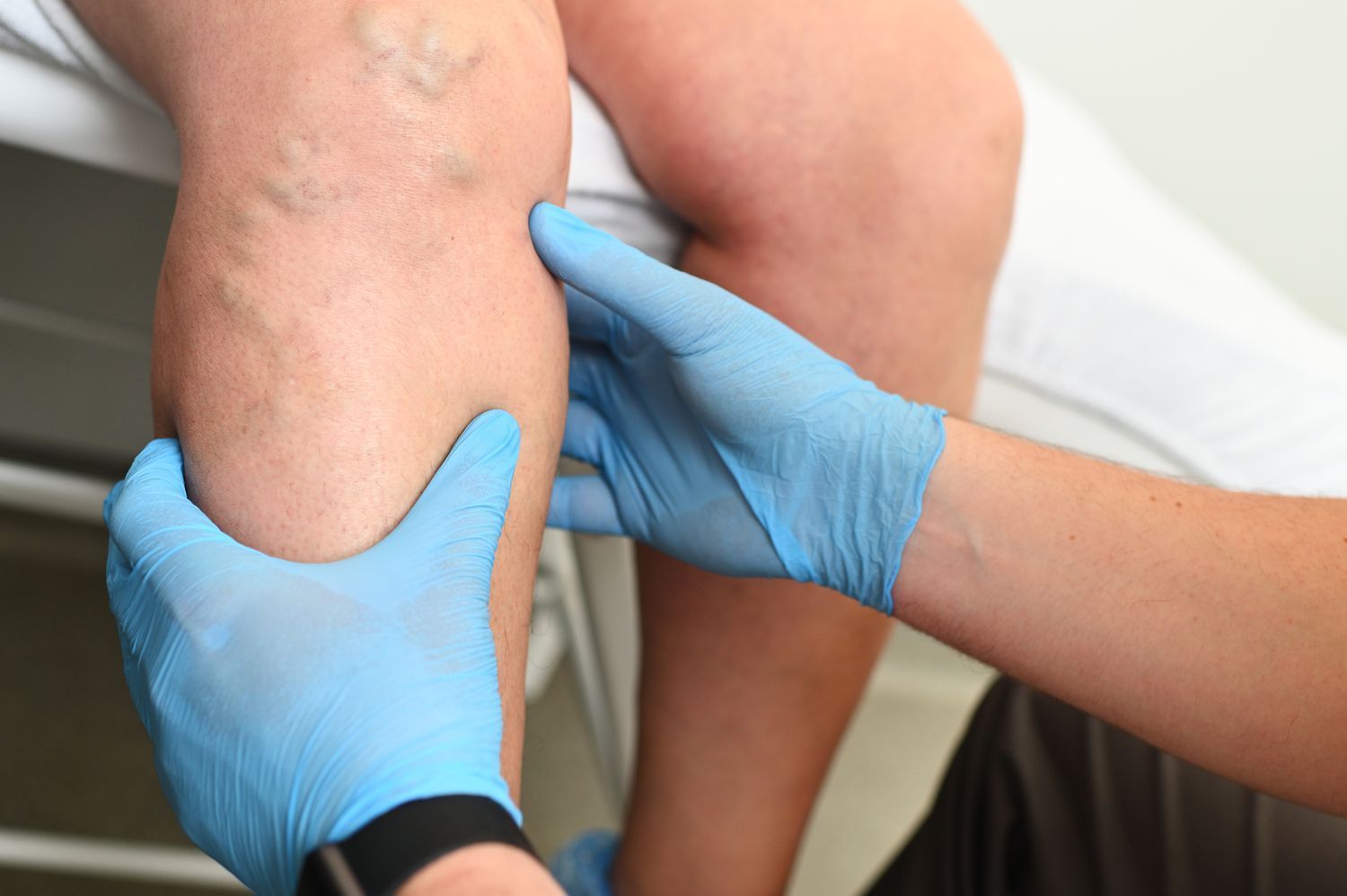
Your leg veins have tiny one-way valves. Their whole purpose is to push blood upward toward your heart against the pull of gravity. When those valves weaken or stop closing the way they should, blood falls backward and pools inside the vein. That pooling is what stretches the vein wall out and creates the twisted, bulging appearance you see through the skin.
Here is the part that catches people off guard. The veins you can see bulging on the surface are usually just a symptom of a bigger problem in a deeper feeder vein underneath. Treating only the visible ones would be like clipping a weed at the stem and leaving the root in the ground. A varicose veins specialist uses ultrasound to map out the entire venous system and pinpoint exactly where valve failure is happening - that mapping step is the reason modern treatment works so much better than the old stripping procedures ever did.
And some patients genuinely believe their varicose veins are purely cosmetic. Sometimes that is the case. But the aching, the heaviness, the ankle swelling, the restless legs at night, the brownish discoloration around the lower calf - those are real medical symptoms of venous insufficiency. Fixing the underlying valve problem resolves most of them.
When Varicose Veins Management at Home Is No Longer Enough
Compression stockings and putting your feet up after work can keep mild symptoms in check for a while. They help push blood in the right direction and reduce swelling. But they do not fix the faulty valves causing the problem in the first place, and for many patients the day comes when those conservative steps just cannot keep up anymore.
If any of the following sound familiar, your veins may have moved past the point where varicose veins management at home is going to cut it:
- Legs that feel heavy and tired by the end of the day, particularly after standing for long stretches at work
- Ankle swelling that was not there a year ago - especially if it is worse on one side
- Skin near your ankles has turned darker, feels dry and itchy, or looks leathery. That discoloration means chronic venous changes have already started affecting your tissue.
- Aching or leg cramping that wakes you at night
- A vein that has become tender, warm, or reddish to the touch - this could indicate a superficial clot or phlebitis and needs prompt attention
The skin changes in particular are the ones I tell patients not to sit on. Once venous insufficiency starts altering the skin around your lower legs, tissue damage is underway. Waiting longer just raises the odds of developing a venous leg ulcer, and those are far more difficult to treat than the vein problem that caused them.
How Your Varicose Veins Doctor Treats Problem Veins Without Open Surgery
The old way of treating varicose veins was surgical stripping. Two incisions - one at the groin, one below the knee - then a wire threaded through the vein to physically pull it out. It worked, but the recovery took weeks and the procedure was hard on patients. Most varicose veins doctors have moved well past that approach.
At Advanced Veins and Vascular, we use minimally invasive procedures done right in our procedure room here in Hillsdale under local anesthesia. No hospital. No general anesthesia. The actual treatment usually takes under an hour.
Radiofrequency Ablation for Varicose Veins Management
This is probably the technique we reach for most often with larger varicose veins. Your varicose veins doctor makes a tiny access point, usually just below the knee, and uses ultrasound to guide a thin catheter into the faulty vein. That catheter delivers controlled radiofrequency energy - basically heat - that causes the vein wall to collapse inward and seal itself shut. Blood reroutes through your healthy veins on its own after that. Your body handles the redirection automatically.
The catheter is about the thickness of a noodle. Patients feel some pressure and occasionally a warming sensation during the procedure, but local anesthesia keeps things comfortable. Most people are up and walking within 30 minutes of the procedure ending and back to their regular routine the next day.
Endovenous Laser Treatment at Our Vein Clinic
Laser ablation works on a similar principle to radiofrequency but uses laser energy instead of radio waves. A thin fiber gets positioned inside the vein under ultrasound, and short bursts of laser energy seal the vein along its entire length as the vascular specialist slowly withdraws it. Think of it as zipping the vein closed from the inside out.
Both methods deliver excellent results. Which one your varicose veins specialist recommends depends on the size and anatomy of the affected vein - the recovery experience between the two is virtually the same.
Foam Sclerotherapy for Smaller Varicose Veins
Not every vein is best suited for thermal ablation. Smaller veins, veins with unusual anatomy, or veins that returned after a previous treatment may respond better to sclerotherapy. A special foam solution gets injected directly into the vein where it irritates the lining, causing it to scar shut. Multiple veins can be addressed in one sitting at our vein clinic, and sessions typically wrap up in 20 to 30 minutes with no anesthesia needed.
Sclerotherapy is also the go-to for spider veins and smaller reticular veins that patients want treated for cosmetic reasons. Quick sessions, minimal discomfort, and you are on your way.
What Recovery From a Varicose Veins Specialist Procedure Looks Like
This is where the modern approach really pulls ahead of the old surgery. After any of these procedures you will wear compression stockings for a period we specify based on what was done. Walking right away is not just allowed - it is encouraged. Getting your legs moving helps blood find its new pathways through your healthy veins faster.
Expect some bruising along the path of the treated vein. That fades within a couple of weeks. A pulling or tugging sensation in the first few days is normal too - that is the sealed vein starting to break down and get reabsorbed by your body. All part of the process.
Our patients from Coldwater, Adrian, Sturgis, and across Hillsdale County are typically back to their normal routines within a day or two. Compare that to the old stripping surgery where you might be limited for two to four weeks. It is a big reason people who had been putting off treatment finally decide to go ahead with it.
Why Your Choice of Vascular Specialist for Varicose Veins Matters
Varicose vein procedures are widely offered these days, but the quality of the diagnostic workup beforehand varies a lot. The treatment itself is only as effective as the mapping that comes before it. If a provider skips the detailed ultrasound or fails to identify every contributing source of reflux, you wind up treating symptoms while the actual root cause stays in place. I have seen patients who went through treatment elsewhere and came to us frustrated because their veins came back - and in most of those cases it was a diagnostic gap, not a treatment failure.
Board certification in vascular surgery matters here. It means the physician has completed extensive training in both the arterial and venous systems. At Advanced Veins and Vascular, our procedures happen in a dedicated room equipped with advanced imaging that lets us see what is happening inside the vein during the procedure, not just before it. Real-time guidance is what keeps these treatments safe and accurate.
A vascular specialist who handles the full range of vascular conditions also catches things a vein-only clinic might miss. Leg symptoms do not always have one cause. Sometimes what looks like straightforward varicose veins has a deeper venous issue or even an arterial component underneath it. Having a vascular surgeon do the evaluation means the complete picture gets assessed.
Talk to a Varicose Veins Doctor About Your Leg Vein Concerns
If your legs have been sending signals - visible veins, persistent aching, swelling that was not there before, skin changes around the ankles - a consultation is the most productive step you can take right now. At Advanced Veins and Vascular in Hillsdale we start every evaluation with a thorough ultrasound to understand exactly what is happening with your venous circulation. From there we lay out your options clearly, with no pressure.
Call (517) 797-5265 to schedule your appointment. One visit gives you a clear picture of what is causing your symptoms and a realistic treatment plan to go with it, so you can stop spending every evening on the couch wondering if those veins are going to keep getting worse.